
This season, we carried out a Top Trial® in Eastern Washington to understand how native beneficial algae could influence soil behavior and tuber development in irrigated potato production. The trial delivered clear evidence that biology-driven management can support more resilient soil systems and improve commercial yield.
For 14 consecutive years, Top Trials® has served at the center of how we validate new practices across our operating footprint. These agronomic trials are intentionally grounded: commercial fields, standard equipment, and side-by-side comparisons that make performance differences unmistakable. This approach ensures any practice we advance is practical, scalable, and economically relevant to real growers. Across 368 trials since inception, we’ve documented an average yield increase of 11% in successful applications, alongside an average ROI of 2.5:1, demonstrating that thoughtful innovation can lead to practical and impactful interventions.
In this trial, MyLand’s on-farm algae system was introduced through an existing center-pivot irrigation setup. Algae were grown on-site and applied throughout the season, allowing us to observe how added biology influences soil structure, nutrient cycling, and crop development under everyday production conditions.
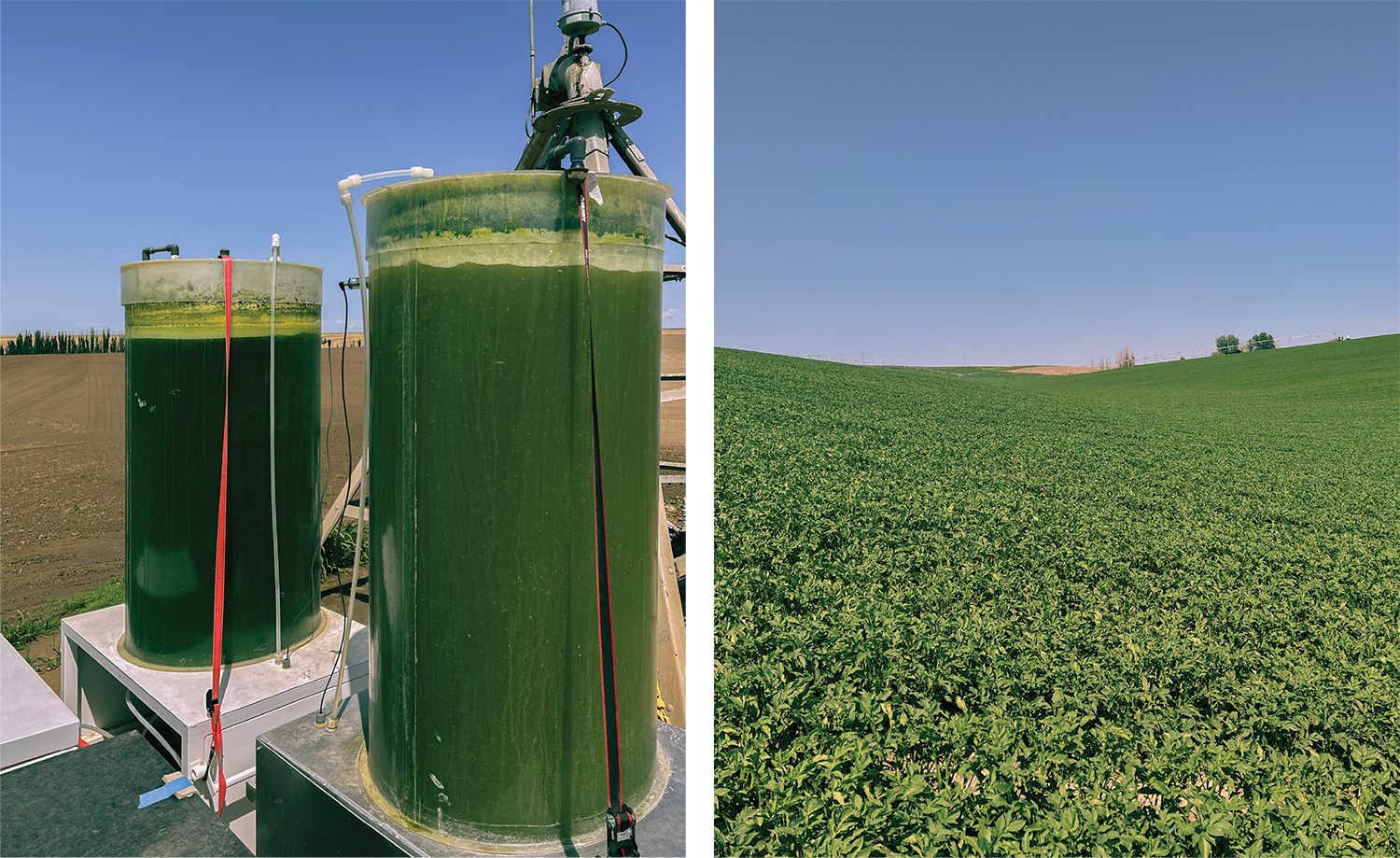
Treated soils showed higher organic matter and increased biological activity, conditions that support stronger roots and more predictable field performance. By harvest, these improvements translated into clear gains in the crop.
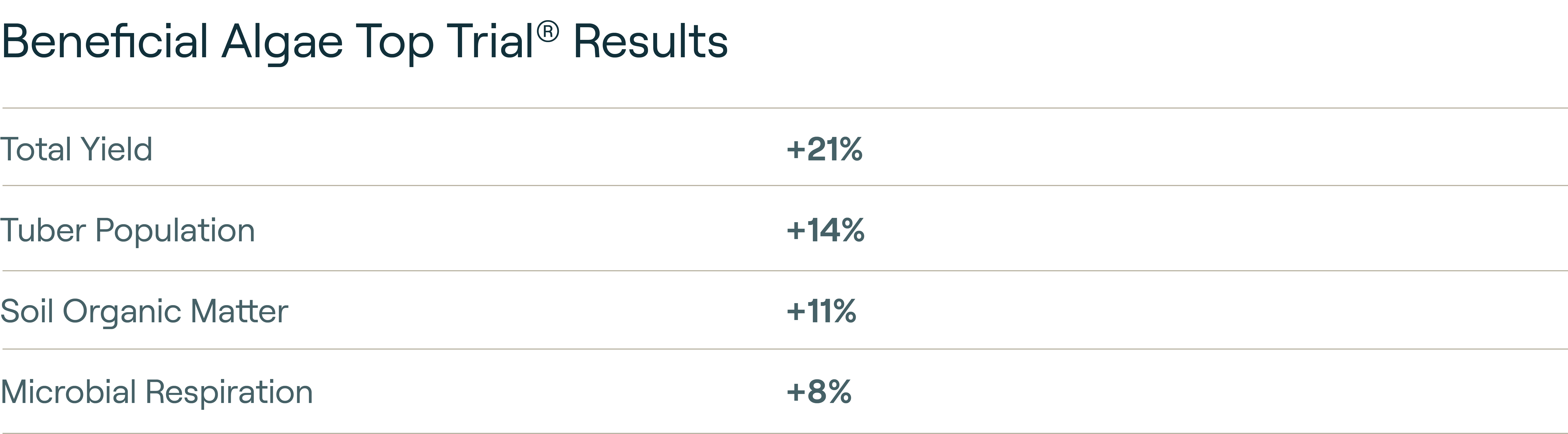
These results reflect a deep understanding of the field and the realities of agriculture. Timing, placement, water management, baseline soil conditions, and crop management at each stage of the season all shape whether a Top Trial® performs as intended. This is where experienced growers and skilled agronomists make the difference. At Intl. Farming, our active management approach treats inputs as part of an integrated system, combining field context with disciplined observation to make promising approaches repeatable.
Agronomic advancements such as these are meaningful to all stakeholders in the food supply chain. For growers, the results reflect meaningful productivity gains. For buyers, they reinforce supply consistency. For investors, they highlight how thoughtful biological stewardship strengthens long-term land performance.
Across our stewardship efforts, we aim to strengthen the biological foundation of the soil, so the entire system becomes more resilient. As biology improves, water moves more effectively, nutrients cycle more efficiently, and crops develop in a more nutrient-dense environment. Over time, that reinforces the land’s long-term capacity while supporting stronger yields and more consistent outcomes.
As we head into a new year, we remain focused on carrying these lessons forward, deepening our commitment to stewardship, and investing in the people and practices that build healthier farms, stronger communities, and a more secure food system.